At a humanistic level it is important that we can bring all aspects of ourselves to our roles, including our cultural, emotional, and spiritual selves.
In this article we look at true emotional diversity, which can perhaps be suppressed by the way corporations interpret and focus on Emotional Intelligence (EQ).
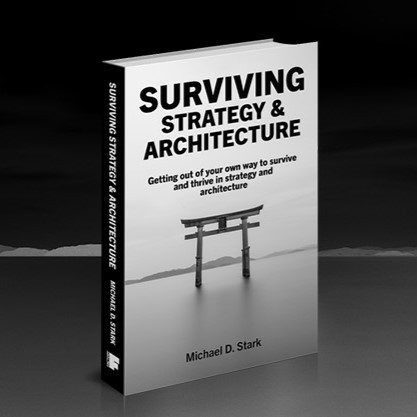
Read more: emotional diversity (chapter 30 extract)This is an extract from a chapter from the below book, available now.
“And those who were seen dancing were thought to be insane by those who could not hear the music.“
The real benefit of diversity to an organisation or company, beyond widening the employee pool numerically, and aligning to a wider range of customers, is to introduce new ways of thinking and new approaches to solving problems and taking opportunities.
We focus a lot on diversity we can see or hear, which is clearly a good thing, however we perhaps miss some of the more humanistic elements of diversity that are not quite so easy to detect, or might be a bit uncomfortable to deal with. Emotions.
I do worry that many companies and organisations are stifling, or not leveraging, new ways of thinking. They are perhaps ticking the diversity box and might be relying too much on some kind of trickle-down impact on thinking, rather than really embracing diversity of thought.
Emotional Intelligence
If you swim in a modern corporation or organisation, you would have heard of Emotional Intelligence, known as EQ, with a good chance that you have been formally or informally evaluated for your EQ score. Perhaps you were assessed when applying for a role, or as part of some type of team self-reflection session; if not then your boss probably has had some training sessions, and they’ve thought about where you might score.
We mostly come across the model introduced by Daniel Goleman, who is described as a science journalist. EQ gained popularity after his 1995 bestselling book Emotional Intelligence. EQ is described as the ability to identify and manage one’s own and other people’s emotions. His model identifies the following five key competencies: self-awareness, self-regulation, social skill, empathy, and motivation.

There is nothing wrong with these competencies or with trying to improve them. In this book I cover most of these areas one way or another, however we need to avoid getting carried away with these as the key to corporate, or personal, success. I would also advise that we need to be cautious with empathy as it doesn’t scale and can impact you to the degree that you become ineffective (e.g. if you work with victims of violence and take on their pain every day); it can be better to favour compassion over empathy, as compassion is boundless and can scale to include all sentient beings. You feel for the person or being and want to take action to help them, but you don’t feel their emotional pain. It is subtle, but powerful. I’ve been exposed to this through Buddhist methods, but if you do your research, you’ll find it has wider support as well. It provided great benefit to me recently when my elderly mother was dying; I think it was of comfort to her also.
The usefulness of measuring EQ
Although an understanding of the EQ competencies has utility in practice, I’m not sure about the usefulness of measuring these EQ competencies.
Modern corporations and businesses love to try to maximise anything that is deemed good, but that means we dualistically tend to define the opposite as being bad. Measuring these competencies in people sets up a duality, and judgement.
First off, measuring anything psychological is problematic, and if you doubt this Google the replication crisis in psychology. Second, applying these measures to individuals is even more problematic. I suspect that having a balance in any population is useful, and natural, but these traits will be distributed on a bell-curve.
Think of all the impactful people in history who probably have not had high EQ. I can’t know for sure, but I’m thinking of Winston Churchill, Malcolm X, Friedrich Nietzsche, and Fyodor Dostoevsky. I’m sure we can put Elon Musk in that list on both the impactful and low EQ measure. According to a 2017 Forbes article by Tomas Chamorro-Premuzic, leaders such as Walt Disney, Steve Jobs, Mark Zuckerberg, and Jeff Bezos appeared to have had low EQ.
But it is not just about famous people; think about all the wonderfully interesting people in your own world that might have low EQ but add that magic richness that makes life surprising and exciting. Many of these people also add significant business value by coming up with ideas that other high EQ people might not have, as well as often being able to turn a flat boring workplace into a high-energy, creative, and fun place to work.
“[…]the only people for me are the mad ones, the ones who are mad to live, mad to talk, mad to be saved, desirous of everything at the same time, the ones who never yawn or say a commonplace thing, but burn, burn, burn like fabulous yellow roman candles exploding like spiders across the stars and in the middle you see the blue centre-light pop and everybody goes “Awww!”
― Jack Kerouac, On the Road
The 2017 Forbes article by Tomas Chamorro-Premuzic says that “most of the academic research — thousands of independent studies and several meta-analysis studies – suggest that EQ is just a sexy name for personality.” Effectively this would equate to the big five personality traits, each of which exists on a continuum. The big five are neuroticism, extraversion, agreeableness, openness, and conscientiousness. A few people, of which I am one, think that this whole EQ fad is just clever marketing which taps into the desire businesses always have, to find a magic answer, and a way to turn human diversity into cold hard data that can then be measured and therefore optimised (targets anyone). Nature does not make mistakes. Diversity of any type is not a mistake. As we’ve discussed, if you discounted low EQ humans, you don’t get many of the great people that add the rich flavour to life.
We’ve talked about low extroversion, i.e. introversion, previously; we have described how there is nothing at all wrong with being introverted. It is similar with neuroticism. In the early days of psychology thought leaders like Freud and Jung had the view that neuroticism was a problem to be cured, rather than being just a normal variation. It can be a good thing; some neurotic people use their worries to fuel creativity. It depends to a degree on how we process these neurotic feelings and if we can manage our negative conversations with ourselves and use them in a positive way. The worries we have might come from an active imagination. But thinking more about problems in an imaginative way many people can find much more creative solutions.
Interestingly a 2019 World Economic Forum article highlighted that when it comes to EQ there is a bit of a bell-curve in terms of average score, with regards to individual contributors at one end, and executives and CEOs at the other end. The highest EQ was in the middle with supervisors and managers, with CEOs on average having the lowest EQ scores. The same World Economic Forum article has some good practical advice: acknowledge the feelings of others, reflect on your emotions, let go of grudges, get plenty of rest and look after yourself, avoid getting caught up in negative self-talk, and show appreciation. It is all based on self-reflection, but without judgement and blame. It is good to take each person as an individual, with strengths and weaknesses, and the key is to find out how they best contribute in a way that gives everyone a positive outcome.
“Always remember that you are absolutely unique. Just like everyone else.”
― Margaret Mead (original source is unclear)

Relax, create a little space, and just be
I have made a lot of mistakes in my interactions with people over the years. As do we all. All I can try to do is reflect, without self-indulgent blaming, and do what I can to learn and improve going forward. I think I’ve come a long way, but the road is long. Any improvement is better than no improvement.
But I try to be authentic. I don’t want to live as someone I’m not. I don’t want to be some type of caricature of myself worrying about trying to tick the EQ or Myers-Briggs boxes. For example, I don’t want to act extroverted in a performative manner; I think I am perfectly normal and valuable as an introvert.
We are all supposed to be different from each other, whatever that difference might be. Difference in gender, ethnicity, race, age, religion, disability, sexual orientation, geography, social economics, temperament, neurodiversity and more. We are not built to fit neatly into boxes for counting and sorting.
“If we are intent upon answering our most serious questions, from climate change to poverty, and curing diseases to designing new products, we need to work with people who think differently, not just accurately.”
― Matthew Syed, Rebel Ideas: The Power of Diverse Thinking
Kind regards
Michael D. Stark
 thinking humanistically about enterprise architecture